Every organization that incorporates more and more AI tools will be transforming itself — not adjusted at the margins, but reshaped in how it operates and decides, how it pursues its mission. That transformation is unlikely to be neutral. As new AI-driven practices arise, an organization’s actual behavior will start to swerve from what it officially says it is.
That divergence runs two ways. Practices drift away from the mission — degradation. Or they outrun it, becoming genuinely better than the stated mission describes — in which case the teams are already steering a different organization than the one on paper. Both strain integrity: a widening gap between the declared self and the operating self.
Perspective Engineering is the discipline of upholding that integrity through the metamorphosis — reading how the collaboration between an organization and its AI is actually evolving, so the gaps can be seen and closed.
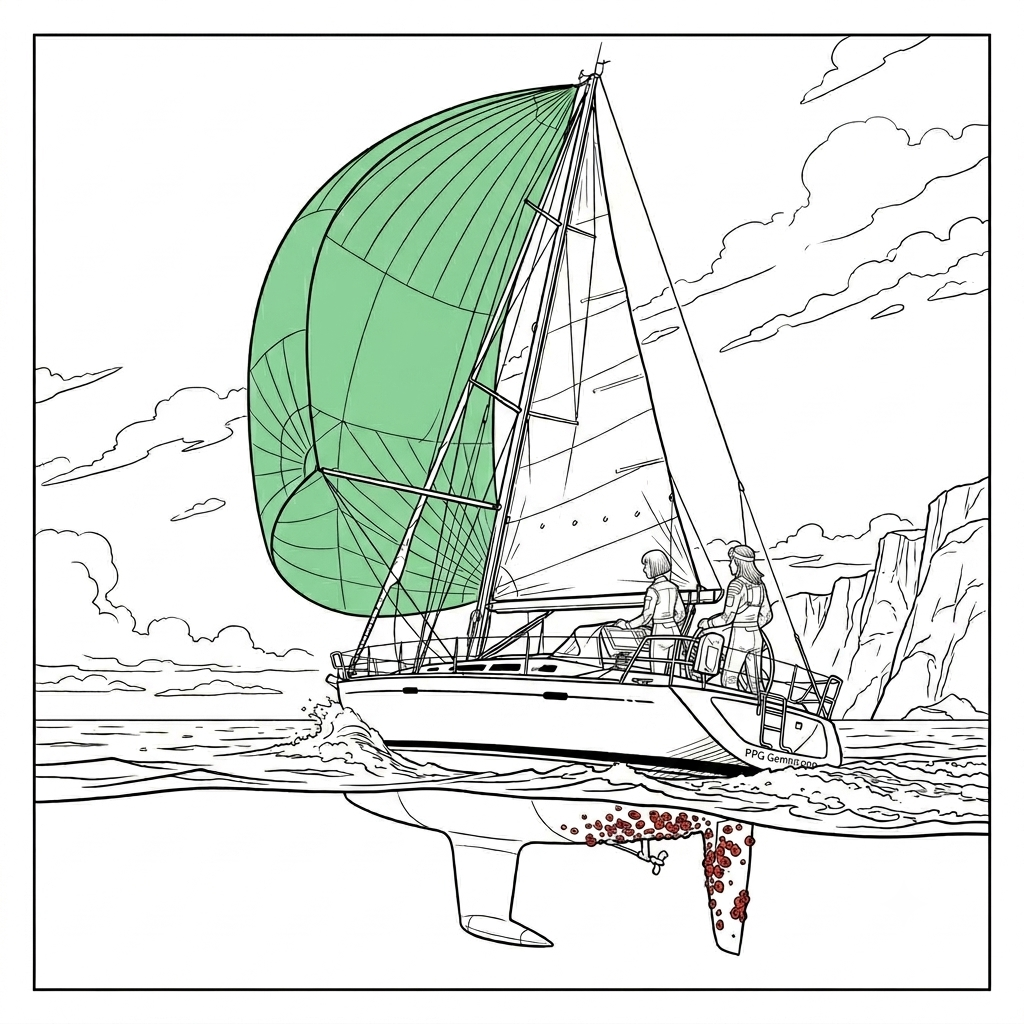
A sustained human–AI collaboration can generate slop and hidden drag over time — like barnacles on a hull.
The same collaboration can also innovate what was not planned — like the addition of the spinnaker sail.
The scanner conducts structured reviews of the transcripts of human-AI collaborations and surfaces instances where actual practice is diverging from stated plans. Methodology →
Using these findings, the organization’s leadership can manage its AI-enabled evolution, conducting timely maintenance (what has drifted) and upgrades (integrating and expanding on what works better).
A note on surveillance risk. In the last two decades, big data corporations have been busy extracting and indexing people’s behaviors and monetizing the results. Perspective Engineering operates differently: the organization reads its own work evolution back to itself, the record grows and is read in-house; nothing is extracted to be sold externally.